
Advanced Fibroid Removal Surgery: Laparoscopic Myomectomy for Fertility Preservation
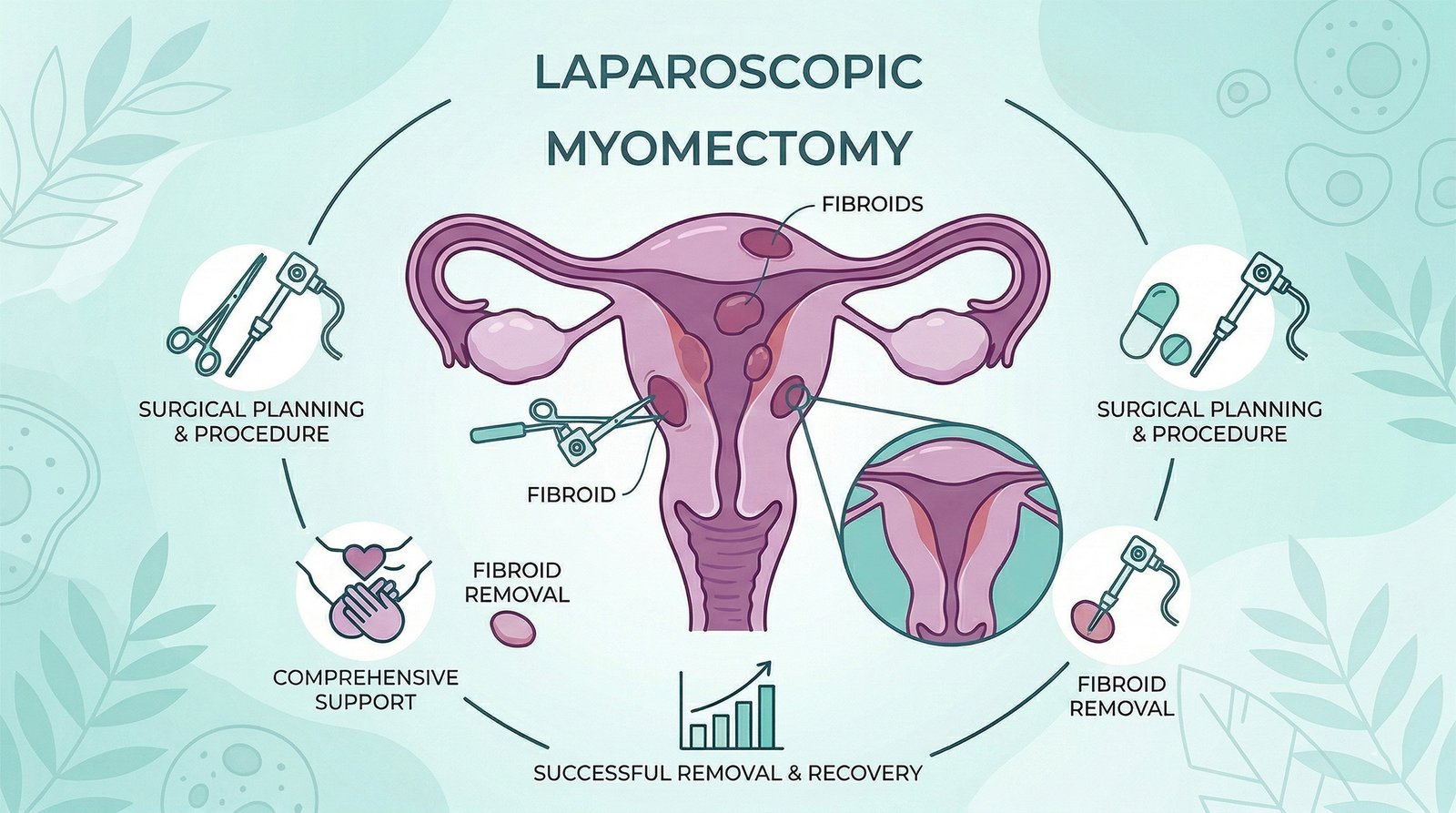
Uterine fibroids are non-cancerous growths that can cause heavy menstrual bleeding, pelvic pain, and infertility. At Aikya Fertility, we specialize in Laparoscopic Myomectomy, a precision surgery that removes fibroids while keeping the uterus intact. This is the preferred choice for women who want to find relief from symptoms while preserving their ability to conceive naturally or through IVF Treatment.
About This Treatment
What you need to know
Understanding Fibroids and Fertility
Fibroids can interfere with fertility depending on their size and location. Submucosal fibroids (inside the uterine cavity) can prevent an embryo from sticking, while intramural fibroids (in the muscle wall) can block the fallopian tubes. At Aikya, we use 3D/4D Ultrasound to map the exact location of each fibroid, ensuring a surgical plan that prioritizes the structural integrity of your uterus.
The Aikya Myomectomy Protocol: Step-by-Step
- Surgical Mapping: Detailed imaging at our J.P. Nagar or Raghuvanahalli Branch to determine the number and size of fibroids.
- Anesthesia: Performed under general anesthesia in our world-class Facilities for a pain-free experience.
- Laparoscopic Excision: Making 3–4 tiny "keyhole" incisions to insert a camera and specialized instruments to detach the fibroids from the uterine muscle.
- Morcellation: Safely breaking the fibroids into smaller pieces to remove them through the tiny incisions, often using a "contained bag" technique for maximum safety.
- Uterine Reconstruction: Meticulously suturing the uterine wall in layers to ensure it is strong enough for a future pregnancy.
- Recovery: Most patients stay overnight for observation and are discharged within 24–48 hours.
Precision Surgery & Patient Safety
Safety and the "Future-Proofing" of your uterus are our main concerns. Our surgeons use advanced energy sources to minimize blood loss and prevent the formation of Pelvic Adhesions. For women with very large fibroids, we may suggest a short course of hormonal treatment to shrink them before surgery, making the procedure even safer. This level of specialized care is why patients choose Why Aikya for complex gynecological surgeries.
Why Choose Aikya for Fibroid Surgery in Bangalore?
- Fertility-First Surgeons: We specialize in "reconstructive" surgery, ensuring your uterus is ready for a baby.
- Minimally Invasive: Smaller incisions mean less pain, less scarring, and a faster return to your routine.
- Integrated Care: We manage associated symptoms like anemia or Menstrual Irregularities before and after surgery.
- Holistic Healing: Post-surgery support through the Srishti Program for nutrition and recovery.
Treatment Process
Step-by-step journey to better health
Initial Consultation
Discussing symptoms like heavy periods and pelvic pressure.
Pre-Op Screening
Blood tests and MRI (if needed) to map complex fibroids.
Procedure Day
Laparoscopic surgery followed by specialized nursing care.
Immediate Recovery
Gentle mobilization and pain management in our recovery suite.
Post-Op Follow-up
A 2-week review to check healing and discuss your timeline for Pre-conception Counseling.
Key Benefits
Why patients choose our fibroid surgery program
Who Should Consider This?
Is this treatment right for you?
Women with symptomatic fibroids who want to have children in the future, those experiencing severe anemia due to heavy periods, and women seeking an alternative to a hysterectomy.
Important Considerations
What to discuss with your doctor
Please consult our specialists to understand how these considerations apply to your individual case.
- Healing Period: You must wait 3–6 months after surgery before trying to conceive to allow the uterine muscle to heal completely.
- Delivery Method: Depending on the depth of the surgery, a Cesarean section may be recommended for future births to protect the uterine scar.
- Recurrence: While we remove all existing fibroids, new ones can grow over time; regular monitoring via Ultrasound is recommended.
Frequently Asked Questions
Answers to common questions
Yes, especially if they are located inside the uterine cavity. Removing them significantly reduces this risk.
In most cases, yes. It offers less pain, less blood loss, and a much faster recovery.
No. The incisions are usually only 5–10mm in size and become almost invisible over time.
You can schedule a priority consultation via our Online Appointment portal.