
Precision IVF with ERA Test: Finding Your Personal Window of Implantation
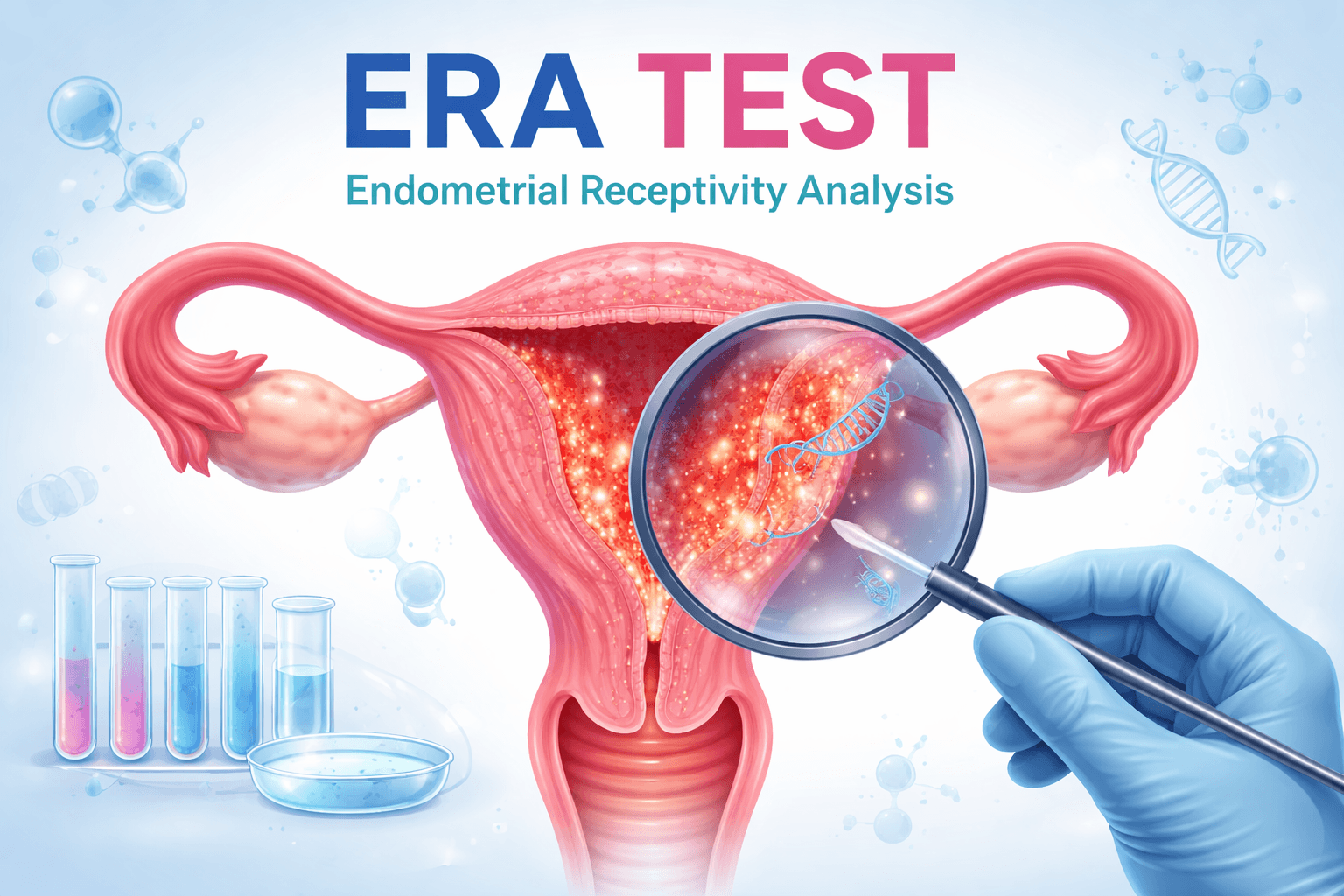
The Endometrial Receptivity Analysis (ERA) is a pioneering molecular diagnostic test that determines the exact timing for an embryo to attach to the uterine lining. By analyzing the expression of over 200 genes, we move beyond "standard" timing to offer a truly personalized embryo transfer, significantly increasing the chances of pregnancy for those with previous IVF failures.
About This Treatment
What you need to know
Understanding the ERA Test
Success in IVF isn’t just about the quality of the embryo; it’s about the “receptivity” of the womb. For most women, the window of implantation (WOI) occurs at a standard time. However, nearly 30% of women have a displaced window—meaning their lining is ready earlier or later than average. The ERA test identifies this specific timing, allowing us to perform a Personalized Embryo Transfer (pET).
The Aikya ERA Protocol: Step-by-Step
- Mock Cycle Preparation: You will undergo a “practice” cycle using the same hormonal medications you would use for a real transfer to prepare the uterine lining.
- The Endometrial Biopsy or Blood sample: On the day a transfer would normally occur, a small tissue sample is gently taken from the uterine lining (endometrium or blood sample).
- Molecular Analysis: The sample is sent to our specialized lab, where the activity of 248 genes is analyzed to determine if the lining was “Receptive” or “Non-Receptive.”
- The Result: The test tells us exactly how many hours of progesterone exposure your body needs before the embryo is introduced.
- Personalized Transfer: In the following cycle, the actual embryo transfer is timed precisely according to your unique genetic data.
Precision Embryology & Data-Driven Success
At Aikya Fertility, we believe in “Transferring with Certainty.” The ERA test eliminates the guesswork associated with standard IVF protocols. By synchronizing the embryo’s development with your uterine receptivity, we can achieve success even in cases where previous transfers have failed without explanation. This data-driven approach is a cornerstone of our commitment to personalized reproductive medicine in Bangalore.
Why Choose Aikya for ERA Testing?
- Expert Interpretation: Our fertility specialists have extensive experience in managing displaced windows of implantation.
- Advanced Molecular Lab: We partner with global leaders in genetic testing to ensure 99% accuracy in gene expression analysis.
- Integrated Care: We combine ERA results with other uterine health checks (like hysteroscopy) for a comprehensive “Womb Evaluation.”
- High-End Precision: Specifically designed for patients with “Unexplained Infertility” to provide clear answers.
Treatment Process
Step-by-step journey to better health
Preparation Scans
Monitoring the lining thickness during a mock hormonal cycle.
Biopsy Procedure
A quick, 5-minute outpatient procedure to collect the endometrial sample or blood sample.
Lab Processing
Next-Generation sequencing of the tissue sample.
Report Generation
Categorization as Pre-receptive, Receptive, or Post-receptive.
Adjusted Transfer
Scheduling the actual Frozen Embryo Transfer (FET) with a precise hour-count for progesterone.
Key Benefits
Why patients choose this treatment
Who Should Consider This?
Is this treatment right for you?
Couples who have experienced Recurrent Implantation Failure (RIF) despite having high-quality embryos, or those with limited embryos who wish to maximize the success of every single transfer.
Important Considerations
What to discuss with your doctor
Please consult our specialists to understand how these considerations apply to your individual case.
The “Mock” Requirement: You must complete a full preparation cycle without a transfer to get the biopsy results. This adds one month to your treatment timeline.
Minor Discomfort: The biopsy procedure may cause mild, temporary cramping similar to a period.
Specific Utility: ERA is most beneficial for patients with specific history of failure; it may not be necessary for every first-time IVF patient.
Frequently Asked Questions
Answers to common questions
Most patients describe it as a quick “pinch” or if its a blood sample pain of a regular venepuncture. No general anesthesia is usually required.
The results are generally considered valid for life, provided there are no major uterine surgeries or significant changes to your health.
While it significantly improves the “environment” for the embryo, success also depends on embryo quality and other health factors.
No, it must be done in a mock cycle because the biopsy disrupts the lining, making it unsuitable for a transfer in that same month.