
Advanced Blastocyst Transfer in Bangalore: The Gold Standard for Success
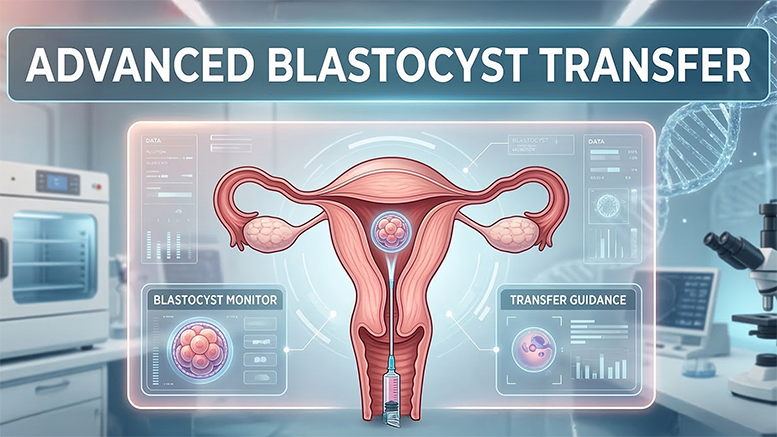
Advanced Blastocyst Transfer involves culturing embryos in a specialized laboratory environment until Day 5 or 6. By allowing embryos to reach this mature "Blastocyst" stage, we can identify the strongest candidates for implantation, significantly increasing the likelihood of a successful pregnancy compared to traditional Day 3 transfers.
About This Treatment
What you need to know
The Science of Blastocyst Culture
In a natural pregnancy, an embryo doesn’t reach the uterus until it is a blastocyst. By mimicking this natural timeline in our state-of-the-art lab, we ensure the embryo is physiologically “synced” with the uterine lining. This synchronization is why Advanced Blastocyst Transfer in Bangalore at Aikya has become the preferred choice for couples seeking the highest precision.
The Aikya Blastocyst Protocol: Step-by-Step
- Extended Culture: Instead of transferring embryos on Day 3 (6-8 cells), we culture them for 5-6 days until they reach 60-120 cells.
- Strict Selection: Only the hardiest embryos survive to the blastocyst stage. This acts as a natural “quality filter.”
- Laser-Assisted Hatching (Optional): If the outer shell is thick, we use precision lasers to help the blastocyst break out and attach to the uterus.
- Synchronized Transfer: The blastocyst is placed into the uterus at the exact moment the endometrial lining is most receptive.
Treatment Process
Step-by-step journey to better health
Fertilization
Eggs are fertilized via IVF or ICSI.
Day 3 Assessment
Embryos are checked for cell division and symmetry.
Extended Incubation
Embryos are moved to blastocyst-specific media for Days 4 and 5.
Blastocyst Grading
We grade the “Inner Cell Mass” (which becomes the baby) and the “Trophectoderm” (which becomes the placenta).
The Transfer
One or two top-grade blastocysts are transferred under ultrasound guidance.
Key Benefits
Why patients choose this treatment
Who Should Consider This?
Is this treatment right for you?
Couples with previous IVF failures.
-
Patients opting for Single Embryo Transfer (SET) to avoid multiples.
-
Older maternal age where embryo viability is a priority.
-
Cases requiring Preimplantation Genetic Testing (PGT) for chromosomal screening.
Important Considerations
What to discuss with your doctor
Please consult our specialists to understand how these considerations apply to your individual case.
- Cycle Cancellation: Not every embryo makes it to Day 5. There is a small risk that no embryos reach the blastocyst stage for transfer.
- Laboratory Dependency: This procedure requires a highly sophisticated lab; it cannot be performed effectively in basic clinics.
Frequently Asked Questions
Answers to common questions
Generally, yes. It allows for better embryo selection and aligns more naturally with your body’s reproductive cycle.
This usually indicates an underlying egg or sperm quality issue. Our specialists will use this data to refine your next protocol.
The procedure itself is the same as a standard IVF transfer—painless, quick, and requiring no anesthesia.
There is a moderate increase due to the additional lab resources, specialized media, and expert monitoring required for the extra 48–72 hours.